Day 29 Task: Jenkins Important interview Questions.
Introduction
Jenkins, the stalwart of continuous integration and delivery, plays a pivotal role in modern DevOps practices. As DevOps Engineers, being well-versed in Jenkins is often a key requirement. In this article, we'll delve into some essential Jenkins interview questions to help you prepare for your next interview.
1. Understanding CI/CD Concepts
Question 1: What’s the difference between continuous integration, continuous delivery, and continuous deployment?
Answer: Continuous Integration (CI) involves frequently integrating code changes into a shared repository. Continuous Delivery (CD) extends CI by ensuring code can be deployed to production at any time. Continuous Deployment takes it a step further, automatically deploying code changes to production after passing automated tests.
2. Exploring CI/CD Benefits
Question 2: What are the benefits of CI/CD?
Answer: CI/CD brings numerous advantages, including faster release cycles, reduced manual errors, improved collaboration, and the ability to get feedback faster.
3. Unveiling CI/CD Essentials
Question 3: What is meant by CI-CD?
Answer: CI/CD is a set of practices that automate the process of integrating code changes (CI) and delivering them to production (CD), ensuring efficiency, reliability, and rapid software delivery.
4. Jenkins Pipeline Mastery
Question 4: What is Jenkins Pipeline?
Answer: Jenkins Pipeline is a suite of plugins that supports implementing and integrating continuous delivery pipelines into Jenkins. It allows defining jobs using a domain-specific language (DSL), enabling the creation of complex workflows as code.
5. Configuring Jenkins Jobs
Question 5: How do you configure a job in Jenkins?
Answer: Jenkins jobs are configured through the Jenkins web interface. This involves specifying source code management details, build triggers, build steps, and post-build actions.
6. Error Handling in Jenkins
Question 6: Where do you find errors in Jenkins?
Answer: Jenkins errors can be found in the console output of a build job, build logs, and the Jenkins system log. The console output is especially useful for diagnosing build failures.
7. Locating Jenkins Log Files
Question 7: In Jenkins, how can you find log files?
Answer: Jenkins log files can be found in the $JENKINS_HOME/logs directory. This directory contains logs related to Jenkins system, agent, and job executions.
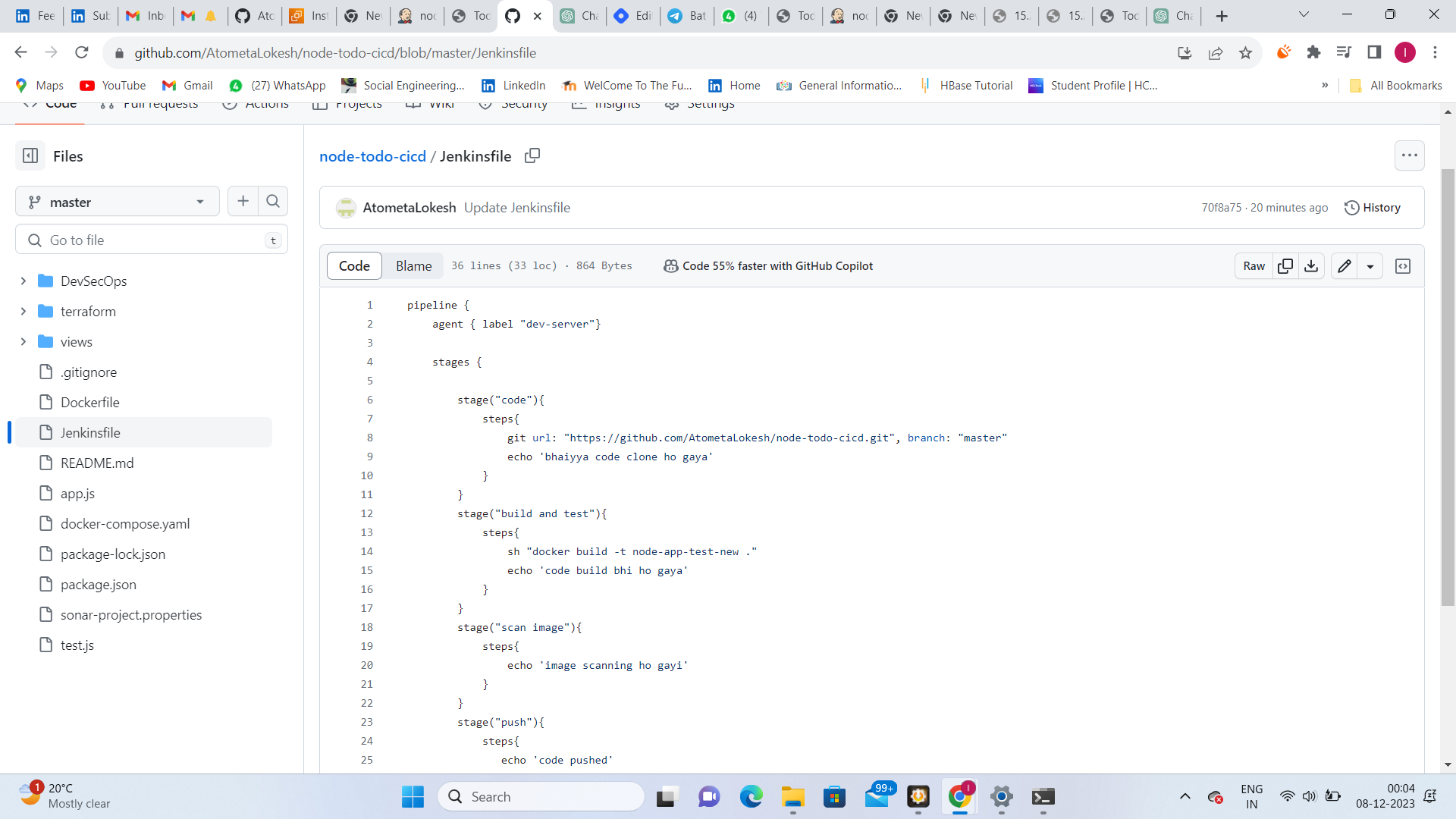
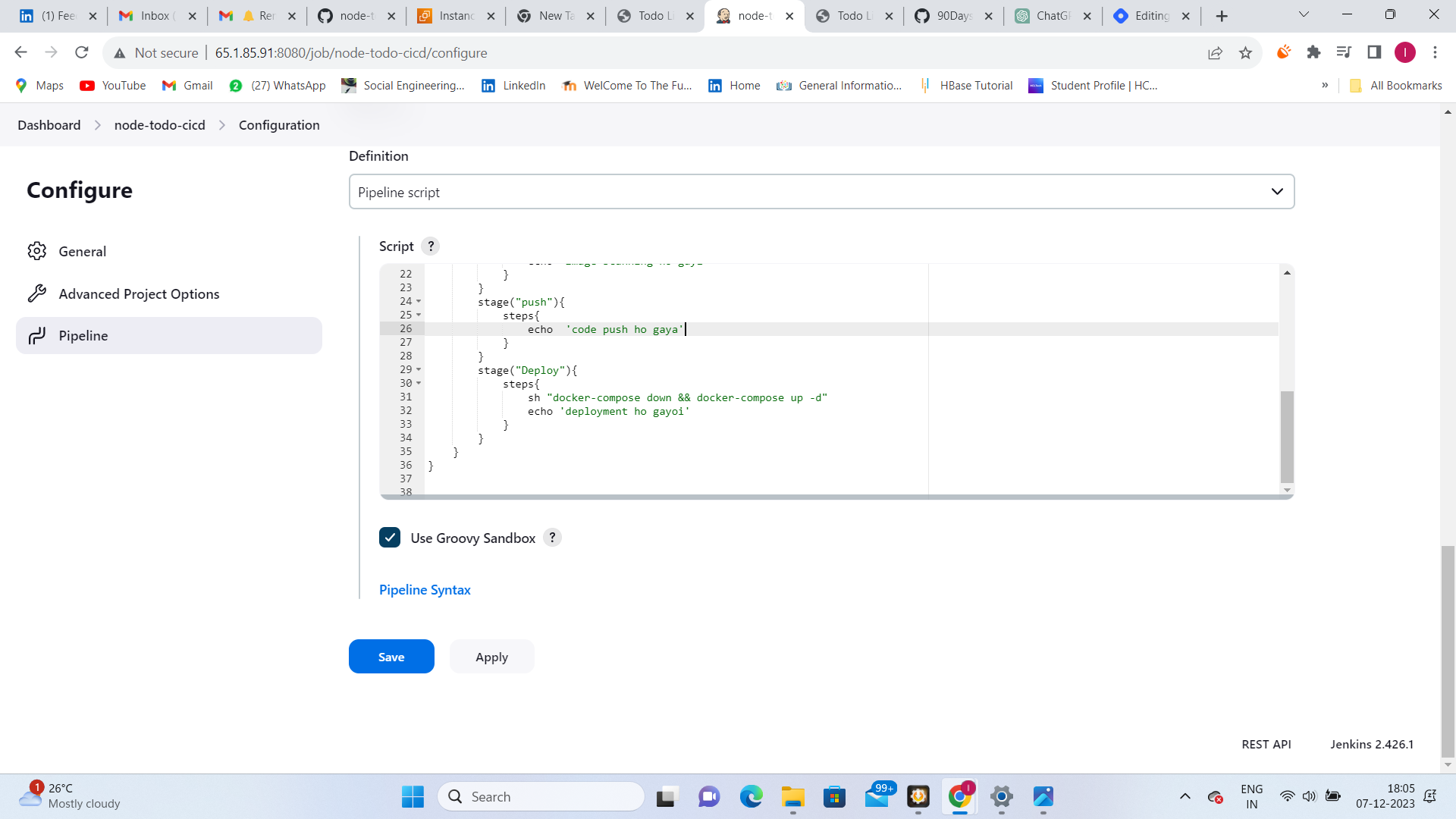
8. Jenkins Workflow Scripting
Question 8: Jenkins workflow and write a script for this workflow?
Answer: Jenkins Workflow allows defining complex build and deployment workflows as code. A simple script might involve defining stages, steps, and conditions for a build.
9. Continuous Deployment in Jenkins
Question 9: How do you create continuous deployment in Jenkins?
Answer: Continuous Deployment in Jenkins can be achieved through a well-defined pipeline. Ensure that all necessary tests pass, and deploy to production automatically.
10. Building Jobs in Jenkins
Question 10: How do you build a job in Jenkins?
Answer: Building a job in Jenkins involves defining the necessary build steps in the job configuration. This can include compiling code, running tests, and creating artifacts.
11. Importance of Jenkins Pipeline
Question 11: Why do we use a pipeline in Jenkins?
Answer: Jenkins Pipeline provides a way to define and manage complex build and deployment workflows as code. It enhances visibility, traceability, and maintainability of the entire CI/CD process.
12. Automation Beyond Jenkins
Question 12: Is Only Jenkins enough for automation?
Answer: While Jenkins is a powerful automation tool, it's often part of a broader automation ecosystem. Other tools like Ansible, Terraform, and Git also play crucial roles in a comprehensive automation strategy.
13. Handling Secrets in Jenkins
Question 13: How will you handle secrets?
Answer: Jenkins provides a feature called "Credentials" to securely manage and handle secrets. These credentials can be used in Jenkins jobs without exposing sensitive information.
14. Explaining Different Stages in CI/CD Setup
Question 14: Explain different stages in a CI/CD setup.
Answer: CI/CD typically involves stages like "Build," "Test," "Deploy to Staging," and "Deploy to Production." Each stage serves a specific purpose in the software delivery pipeline.
15. Jenkins Plugins Familiarity
Question 15: Name some of the plugins in Jenkins?
Answer: Jenkins boasts a rich plugin ecosystem. Some notable plugins include "Git Plugin" for source code management, "Docker Pipeline" for Docker integration, and "Blue Ocean" for a modern, visual approach to pipeline creation.
Conclusion
Mastering Jenkins is key to excelling in the world of DevOps. These interview questions cover a broad spectrum of Jenkins features, ensuring you're well-equipped for any DevOps interview. Keep practicing, exploring, and embracing the continuous learning journey in the vast landscape of DevOps and automation.
#DevOps #JenkinsInterview #ContinuousIntegration #ContinuousDeployment #TechBlog #Hashnode #InterviewPrep